
This History is taken from (from ‘The History of Marchington’ by P Woolley & J Ellwood published privately 1989)
The earliest records
In the Domesday book, there is a ‘parish’ and ‘manor’ of Marchington. In 1089 Sir Henry Ferrers endowed the land on which the current church is built. In the 13th century a chapel was built and dedicated to John the Baptist. An early record states that the priest in 1254 was named ‘Helias’. The oldest (from 1541) survival of this church is a very worn slab just below the pulpit, bearing the name of William Bowyer. in 1592 Walter Vernon was buried in an alabaster tomb, with representations of his family and this is still present in today’s church.

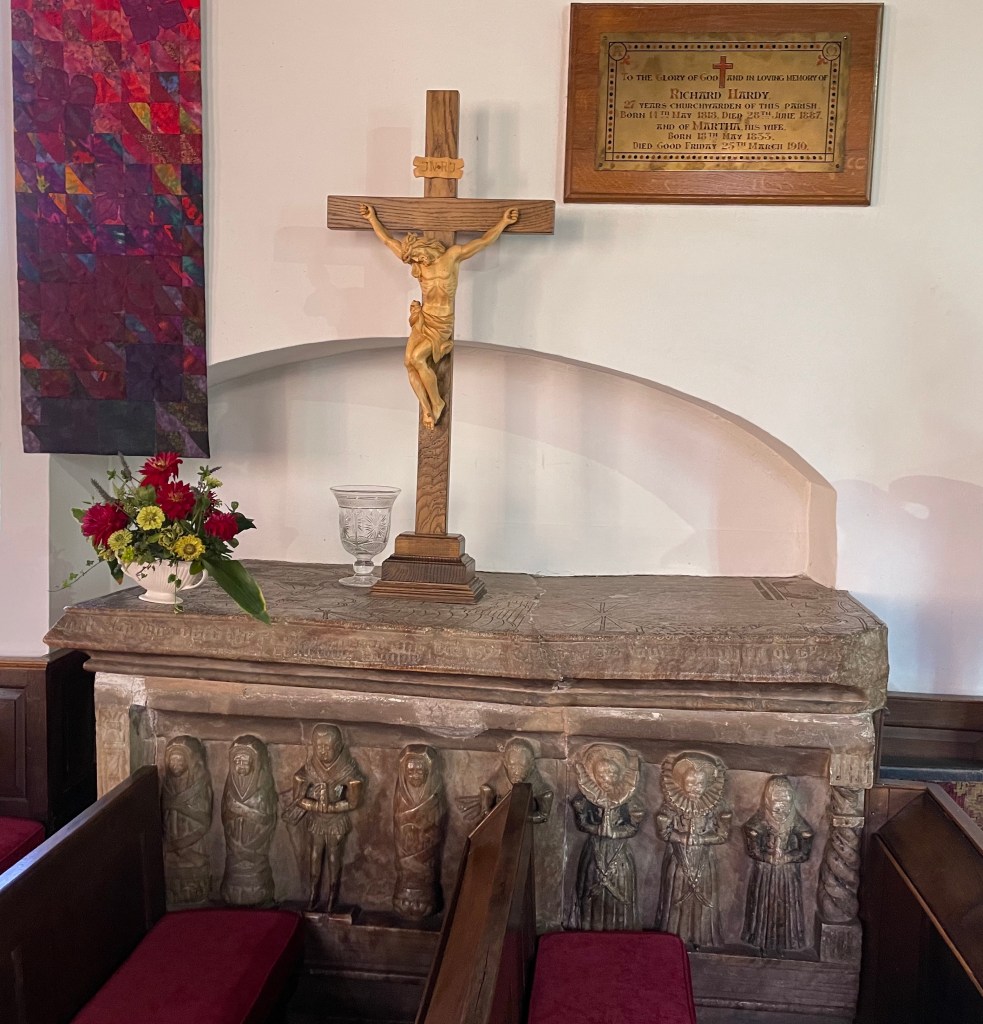
Walter Vernon’s alabaster tomb
The ‘New Church’
Replacing a ‘rotten and ruinous’ building
In 1734 the Lord High Chancellor heard that parishioners were worried that the church would fall on their heads in stormy weather, so they asked for the church to be rebuilt at an estimated cost of £1154, and fund raising started in churches all around the country. However only £400 was raised, so a more modest building was designed and built, and completed in 1744. Some timbers from the old building were used to re-hang the bells in the belltower, and the oak box-pews were re-used too. At this time it was re-dedicated to St Peter.

Completed 1744 
The main church from the pulpit 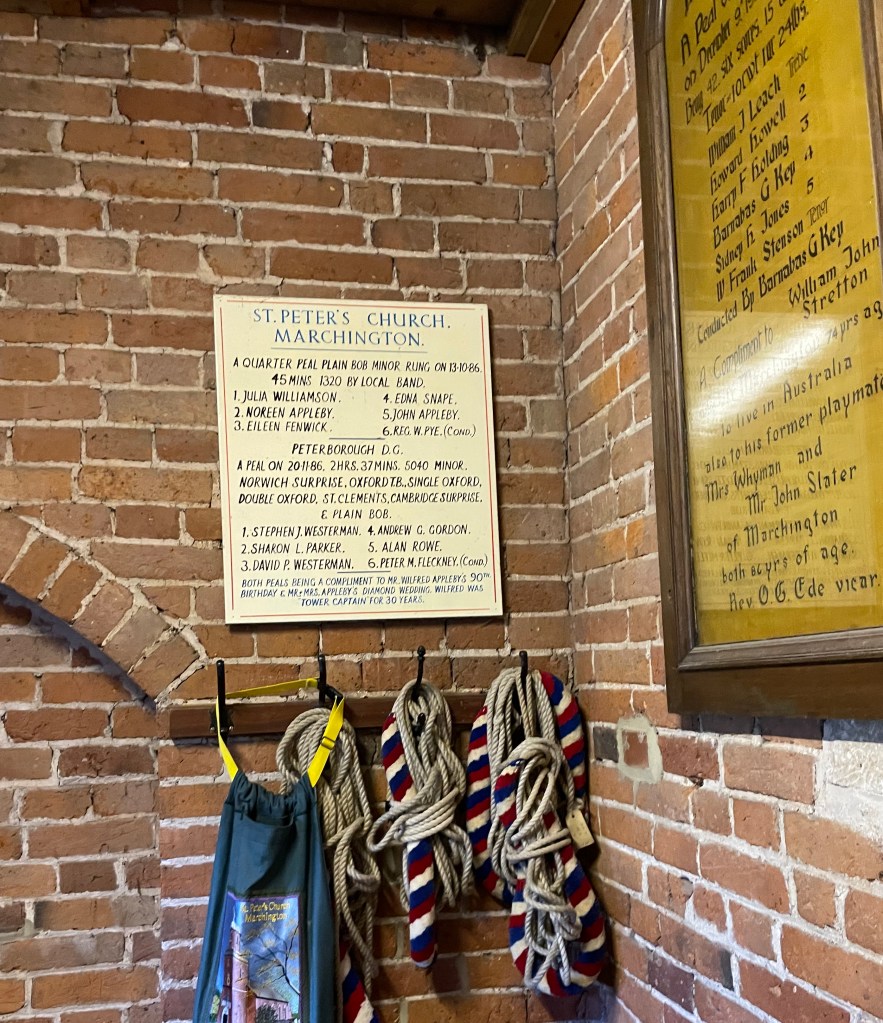
The Bell Tower
Adding the Chancel
In 1892 monies were being raised for Church improvements, which was the building of a Chancel and making improvements to the pulpit and removing the pew doors, which were used as wainscotting for the walls. These can still be seen.
St Peter’s church is a Grade II* Listed Building.

 St Peter's Church, Marchington